
Home Composers Full list of music Special Collections Latest additions Using this site About us Links

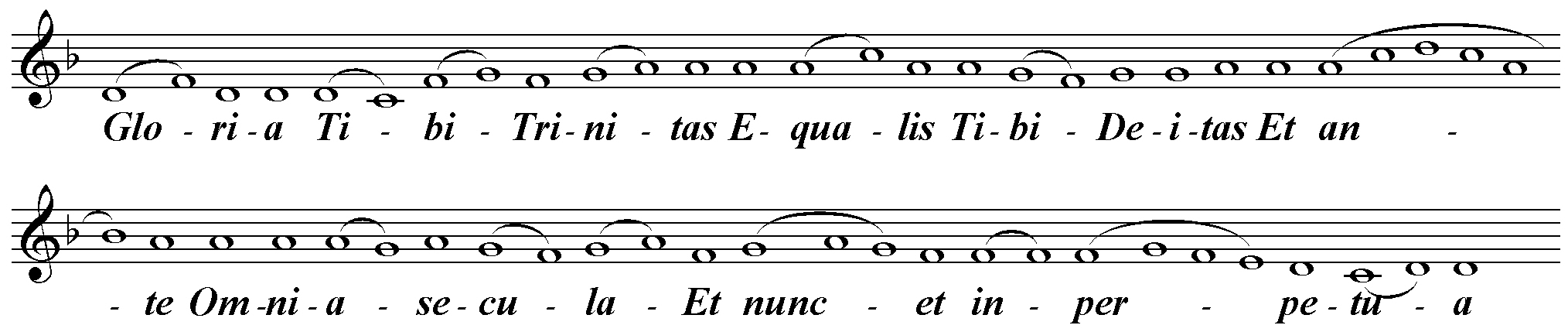
The plainsong chant "Gloria Tibi Trinitas" achieved a remarkable popularity in the Sixteenth Century. John Taverner's Mass based on this theme was written in the 1520s. It was were very widely admired, especially the setting within it of the words "In Nomine".

Music now available

In Nomines
by the following:
John TAVERNER (1) transcribed for keyboard
John TAVERNER (2) Dona Nobis Pacem transcribed for keyboard
William BLITHEMAN (1) for keyboard
William BLITHEMAN (2)
William BLITHEMAN (3)
William BLITHEMAN (4)
William BLITHEMAN (5)
Nicolas CARLETON for keyboard
Nicolas CARLETON for two players at one keyboard
John DOWLAND "Farewell" Fancy for lute
John BULL (1) Musica Britannica Vol XIV no 20
John BULL (2) Musica Britannica Vol XIV no 31
John BULL (3)Musica Britannica Vol XIV no 22
John BULL (4)Musica Britannica Vol XIV no 23
ThomasTOMKINS (1) Musica Britannica Vol V no 05
ThomasTOMKINS (2) Musica Britannica Vol V no 09
Nicholas STROWGER for keyboard
William WYNNE-WILLSON for left hand alone


In the firteenth century masses were structured round traditional plainsong chants such as the "Gloria tibi Trinitas" shown above. This chant was repeated throughout the work in one voice, while the other voices joined in harmonious counterpoint.

The popularity of Taverner's setting inspired many composers to compose instrumental In Nomines mainly for keyboard, but also for lute and for consorts of viols. The form, like a passacaglia, required the plainsong theme (usually only once) to be included note for note in the music.

A helpful feature of the most recent versions of the Sibleius software used for the music on this site is that you can now colour anything in the score. So I have been able to pick out in red those notes which form part of the "Gloria tibi Trinitas" plain-song. To appreciate the value of this try comparing the two Carleton pieces. In the first of these the plain-song is completely obvious: it forms the treble line of the piece. In the second In Nomine by Carleton (for piano duet) each note in the plain-song is repeated, and these notes move around between the hands of the Primo player. If you are unfamiliar with the plain-song theme it may be helpful to play first the pieces in which the theme is exposed (Blitheman (2) and WWW are two more examples). As you get to know the theme you will find it easier to appreciate its presence in the other pieces in which it is more heavily disguised.


Comments are welcome. Please write to williamww@aol.com    Last modified: 17 March 2009.